
Cacao, Chocolate, and Right Relationships in (and with) the Natural World
12/12/25: A workshop on our senses, soils, ecosystems, love of community, and regenerative cacao production with Sarah Bharath and Didi Pershouse
Enroll in Course
"Nutrient-dense and flavorful cacao beans and chocolate can only begin with informed stewardship of cacao systems that are created out of deeper respect for - and active encouragement of - more diverse, regenerative agricultural systems that benefit all beings in the space." - Sarah Bharath
Join Sarah Bharath and Didi Pershouse for a very special 2-hour workshop
Friday, December 12th, 10 AM EST (11 AM AST)
Check here to see this in your time zone
There is a saying that "Cacao loves community. It never does well alone." What does that mean? What are the right relationships cacao wants to have, and what can it teach us about our own relationships?
This participatory online workshop will dive into the ecological and social history of cacao and its fermented child: chocolate. Sarah will describe her living-systems multi-sensory approach to cacao education that is being used to regenerate cacao systems and the human communities that steward them, and partake of them. Whether you are a chocolate afficionado, or cacao producer, you will love this workshop!
Too often in the cacao world, growers are easily seduced into focusing solely on the cacao tree. Limited attention is paid to cacao's dependence on a functional connection to the soil in which it grows, and the companions that want to grow with it. Chocolate consumers are often unaware of the microbial workforce and plant diversity needed to produce subtle flavors, effects, and quality.
In fact, soils and forest understories are multi-dimensional, multifunctional, and highly relational spaces that are critical for both the survival of cacao and cacao's field companions. These soil-microbial and companion-plant ecosystems hold powerful keys to current challenges in cacao production, and reveal hidden dimensions of cacao plant science and flavors in the cacao treasures we eat and drink.
With a systems approach, cacao ecosystems can be thriving, highly productive, long-lived systems that actively contribute to the farmers' ability to build a profitable livelihood around it all, while providing abundant habitat for diverse life both above and below ground.
 Sarah teaching the "Bread vs. Flour" demo of the soil sponge (from Didi's Understanding Soil Health and Watershed Function Manual) to cacao producers in Suriname. Photo by Rachel Saman.
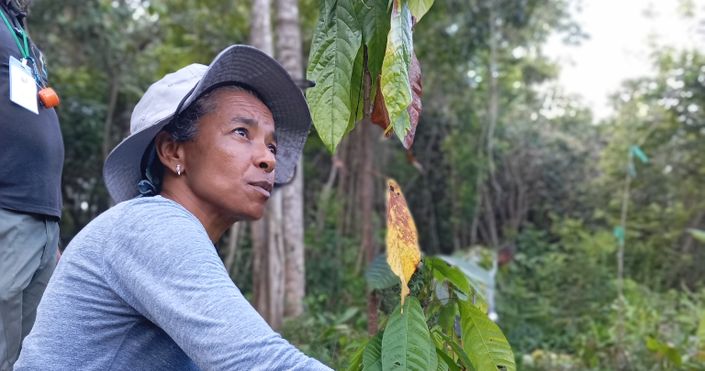
(Banner photo of Sarah Bharath, at top of page by Tan Bun Skrati @tanbunskrati)
Your Instructor
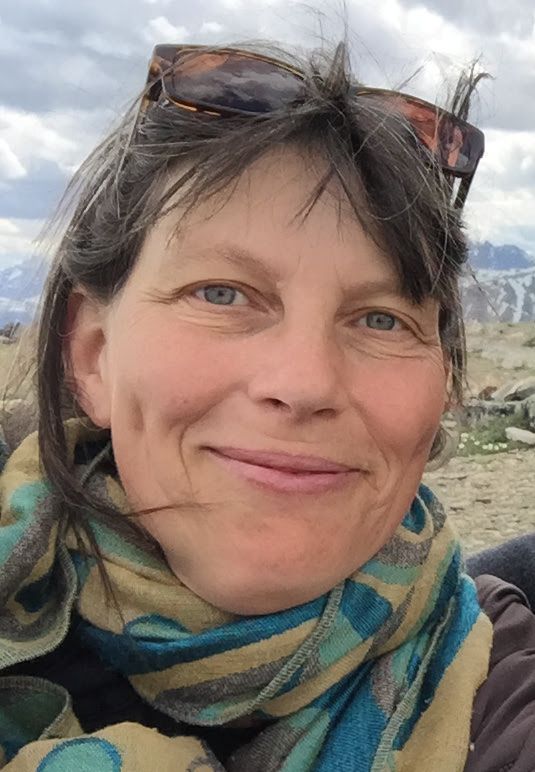
Didi Pershouse is well known as an innovative international educator both in-person and online. She is the founder of the Land and Leadership Initiative. Her facilitator's guide Understanding Soil Health and Watershed Function is used in over 90 countries.
She became deeply involved in the intersection of food systems and health systems while providing rural health care for two decades at The Center for Sustainable Medicine, and wrote The Ecology of Care: Medicine, Agriculture, Money, and the Quiet Power of Human and Microbial Communities.
She has written a field training manual for the UN-FAO Farmer Field School Program and the Andhra Pradesh Community Managed Natural Farming Initiative in India, involving over 1,000,000 smallholder farmers. She was a contributing author to The Climate Emergency: How Africa Can Survive and Thrive; Climate Change and Creation Care; and Health in the Anthropocene. She was one of five speakers at the United Nations-FAO World Soil Day in 2017.
She serves on the Planning Commission for her town, is a board supervisor for the White River Natural Resources Conservation District, and is on the board of directors of Regenerate Earth, Soil Carbon Coalition and the Vermont Healthy Soils Coalition. While serving on the state appointed Payment for Ecosystem Services and Soil Health Working Group, she helped to reorient the program back to its public roots. She led a successful effort to conserve the Zebedee Headwaters Wetland while serving as a Vermont Conservation Commissioner.
She is on the Vision Council of the Global Earth Repair Convergence, and a member of the Ecosystem Restoration Alliance. She is a lineage member of the Change Agent Development Community (stewarded by Carol Sanford), and is seeding new communities of practice in a Wisdom tradition that uses living systems thinking.