
The Architecture of Cooling Oases
Lessons in Resilience from 50 years at Village Homes in Davis, CA, with Carl Welty and Kathryn Alexander
Enroll in Course
The Architecture of Cooling Oases
Join us at 3pm ET on March 31st,
Sign up now to attend live or get access to the recording.
Come join Didi Pershouse this Saturday at 3pm ET in conversation with two architects—Kathryn Alexander and Carl Welty—who have developed building processes designed to work with the planet’s living climate regulation rather than against it, helping land retain water, stay cool, and heal. Had this approach been widely practiced over the last fifty years, we would be living in a very different world right now.
The good news? It’s not too late — and it’s more accessible than you might think. In this workshop you will discover how you can design and build in a way that actually makes a neighborhood cooler, healthier, and more alive, as well as more resilient to both fires and floods.
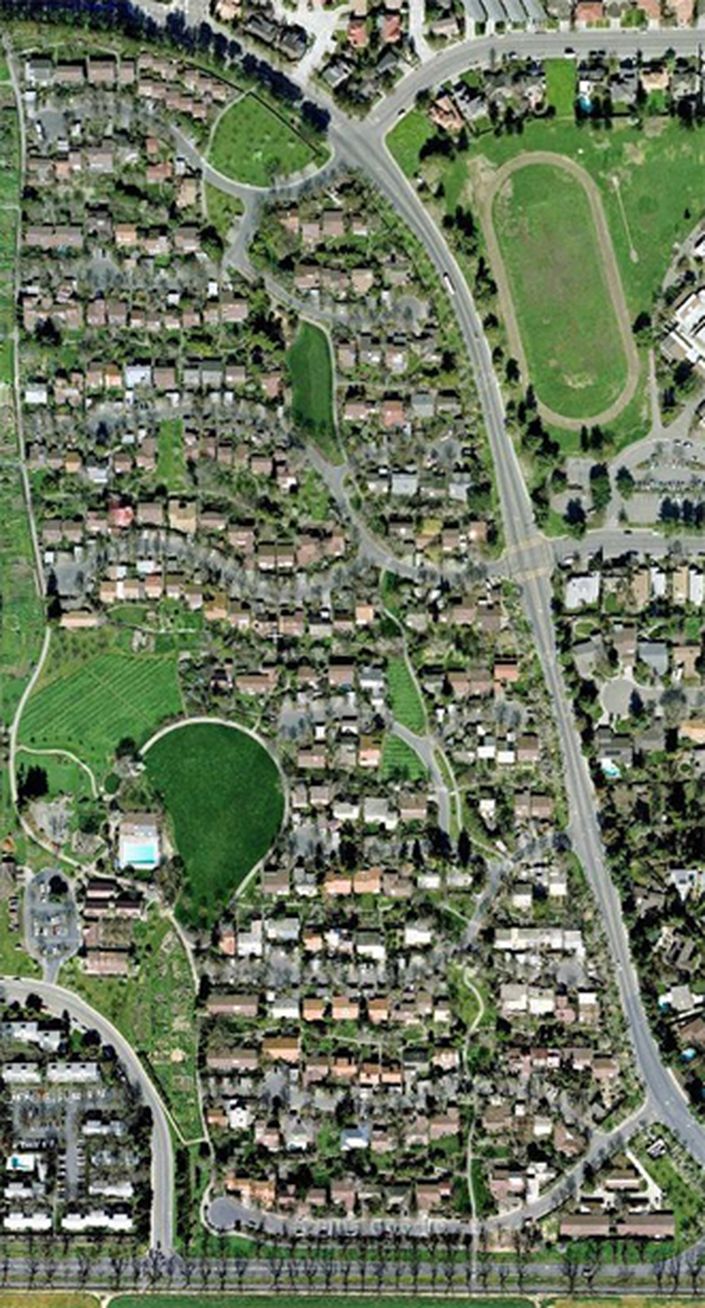
The centerpiece of our discussion will be Village Homes, a 60-acre development in Davis, California, where water directed into integrated landscapes promotes healthy, moist soil that supports dense vegetation and mature trees that cool the air and buildings.
The impact is dramatic and measurable: Village Homes’ microclimate runs 10-15°F cooler than surrounding conventional Davis neighborhoods during summer afternoons. This isn’t a subjective impression but a documented temperature difference, resulting directly from transpiration and shade from mature trees—now nearly fifty years old—growing in deep, moisture-rich soil continuously recharged by captured stormwater.
Building is the most impactful thing humans do on this earth — and it is inherent to who we are. Every species needs a home and that need isn’t going away. So if we are to continue living on a planet we love and cherish, we must learn to build differently — not from convenience or ego, but in deep partnership with the living systems that sustain us all.
At the heart of this is water. Specifically, the land’s ability to hold it. Local cooling through plant transpiration—and a multitude of natural climate-regulating processes that follow—depends on healthy, sponge-like, hydrated soil and an abundance of vegetation. The way we build structures and communities either supports those systems or dismantles them. Right now, we dismantle them, almost by default, resulting in intense heat, and increased risk of fire and floods centered around residential areas. But it doesn’t have to be that way.
Ready to learn more? Sign up to attend our mini-workshop live, or get access to the recording.
About the instructors:
Kathryn Alexander, MA serves as Chief Strategist for SoilSmart-SoilWise.org, one of the first organizations to create a team of regenerative architects and ecological planners. She works as a consultant, author, and educator specializing in ethics, systems thinking, and regenerative change. Her approach centers on learning from nature as the ultimate expert, providing frameworks for effective change and regenerative building that work in harmony with natural systems—the largest, most successful, and complex system of all. Kathryn's work has been shaped by the discovery of the biotic pump theory and her recognition of the interconnected crises we face today. This understanding led her to focus on educating others about how rain forms and how our planet has maintained its own cooling systems since the beginning of time. She is now focused on the applications of the Earth Principles Framework™ as applied to resilient building and development.

Carl Welty is a California licensed architect with over 30 years at the forefront of green building and sustainable design. Carl’s work focuses on affordable, energy-efficient, and resilient design — leveraging solar orientation, climate-appropriate principles, and light gauge steel construction to double energy performance with little or no added cost. His projects include a 9,000 sq ft Water Conservation Education Center that scored 60% above California’s Title-24 baseline (30% above is considered high performing) and a greenhouse engineered to school seismic standards, at 20% of the cost of greenhouses of the same size, constructed for LAUSD Highschool.
A proponent of regenerative design, Carl believes buildings and communities should generate more resources than they consume while restoring native habitat. His research on Village Homes explores how integrating trees, edible landscapes, and natural water systems into community design can cool our planet — one neighborhood at a time.
He holds a Master of Architecture from Yale University and a Bachelor of Architecture from Cal Poly San Luis Obispo, and is Principal at CarlWeltyArchitects.com, and Director of Architecture and Planning at Banning Ranch Land Trust.

Your Instructor
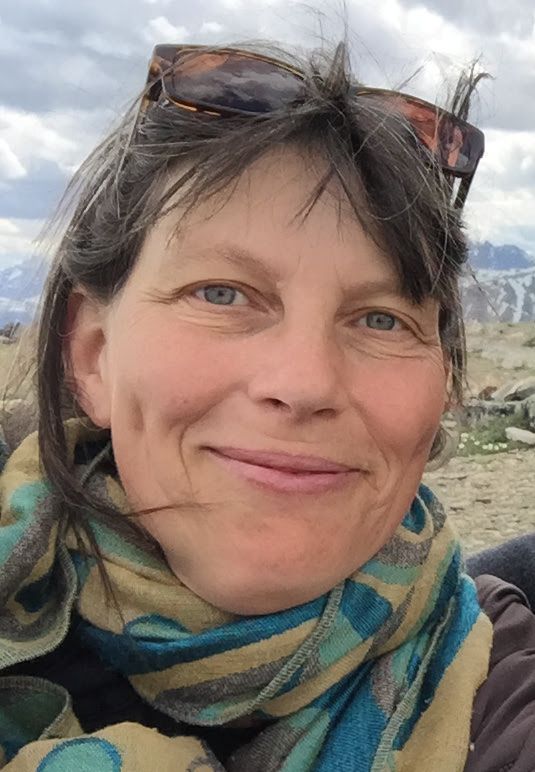
Didi Pershouse is well known as an innovative international educator both in-person and online. She is the founder of the Land and Leadership Initiative. Her facilitator's guide Understanding Soil Health and Watershed Function is used in over 90 countries.
She became deeply involved in the intersection of food systems and health systems while providing rural health care for two decades at The Center for Sustainable Medicine, and wrote The Ecology of Care: Medicine, Agriculture, Money, and the Quiet Power of Human and Microbial Communities.
She has written a field training manual for the UN-FAO Farmer Field School Program and the Andhra Pradesh Community Managed Natural Farming Initiative in India, involving over 1,000,000 smallholder farmers. She was a contributing author to The Climate Emergency: How Africa Can Survive and Thrive; Climate Change and Creation Care; and Health in the Anthropocene. She was one of five speakers at the United Nations-FAO World Soil Day in 2017.
She serves on the Planning Commission for her town, is a board supervisor for the White River Natural Resources Conservation District, and is on the board of directors of Regenerate Earth, Soil Carbon Coalition and the Vermont Healthy Soils Coalition. While serving on the state appointed Payment for Ecosystem Services and Soil Health Working Group, she helped to reorient the program back to its public roots. She led a successful effort to conserve the Zebedee Headwaters Wetland while serving as a Vermont Conservation Commissioner.
She is on the Vision Council of the Global Earth Repair Convergence, and a member of the Ecosystem Restoration Alliance. She is a lineage member of the Change Agent Development Community (stewarded by Carol Sanford), and is seeding new communities of practice in a Wisdom tradition that uses living systems thinking.